Beyond Calm: What Clay Really Builds in Children
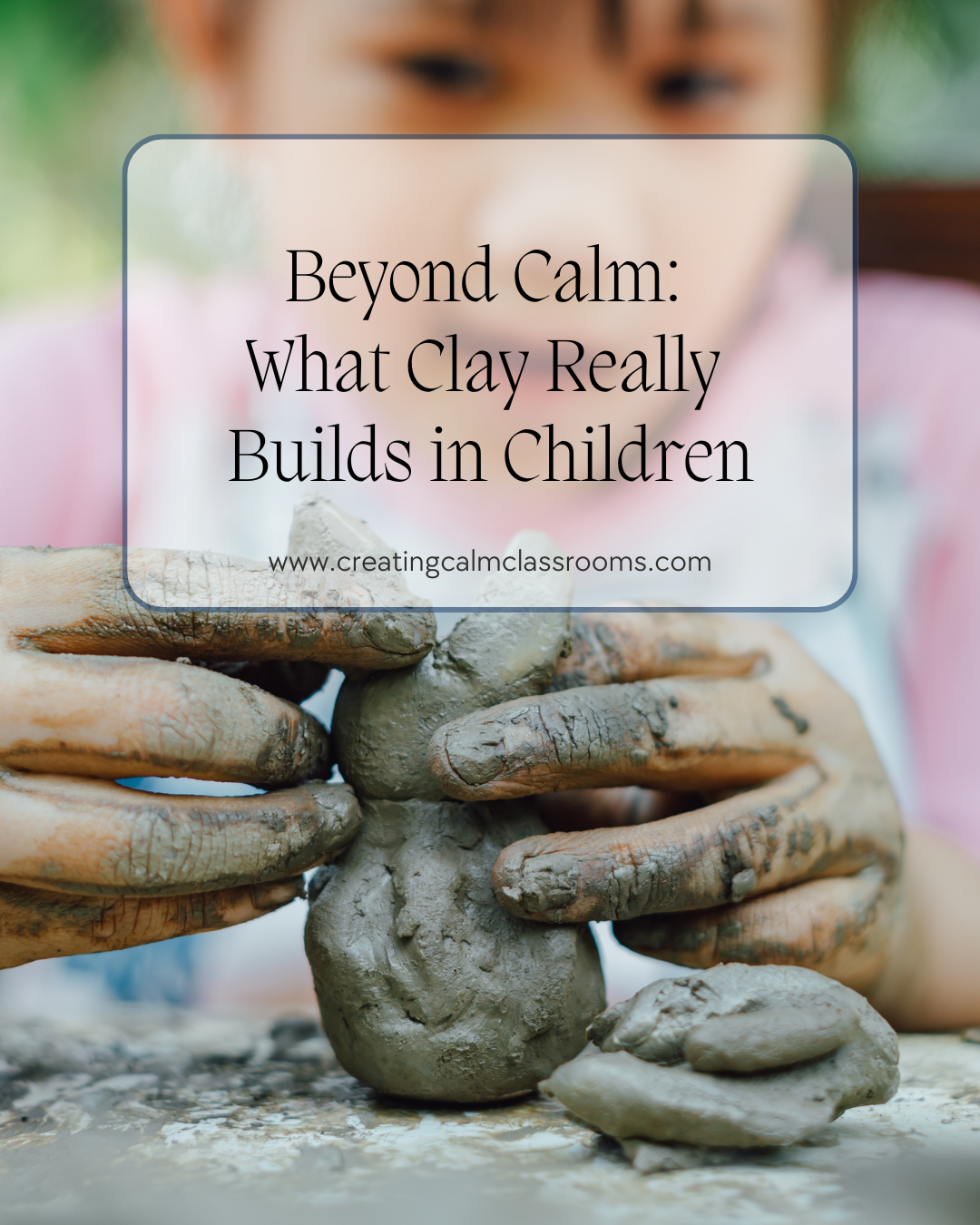
There's a moment that happens in classrooms when you bring out clay—a kind of collective exhale and gentle excitement. Shoulders drop. Voices soften. Children who were bouncing off the walls just minutes before settle into a focused quiet.
It's tempting to label clay as a calming tool and leave it at that. And yes, clay absolutely can help children find calm; research shows it significantly reduces anxiety and stress (Kimport & Robbins, 2012). But when we think of clay only as something that settles children down, we miss something far more profound happening beneath the surface.
Clay doesn't just help children regulate in the moment. It teaches their nervous systems something fundamentally different about what they're capable of handling.
Building Capacity, Not Just Calm
Capacity is the ability to stay present when something feels hard. To tolerate frustration without tipping into overwhelm. To try again after something doesn't work out. To remain engaged without needing constant external support.
Think about the child who crumples their math worksheet the moment they make an error, or the student who shuts down entirely when their block tower falls. These aren't children who lack intelligence or effort, their nervous systems haven't yet learned that they can move through difficulty without falling apart.
That's what clay quietly, consistently helps children practice.
How Clay Complements Our Other Tools
Clay isn't meant to replace calm-down corners, breathing exercises, or mindfulness practices. These tools are essential and research-backed.
What makes clay unique is how it works at a different level. While breathing exercises and mindfulness require self-awareness and engage the thinking brain, clay works primarily through the body—through what neuroscientists call "bottom-up" processing (Elbrecht & Antcliff, 2014). It doesn't ask children to understand what they're feeling. Their hands simply engage with a material that naturally regulates their nervous system.
This makes clay accessible when other tools might not be. When a child is already dysregulated, their prefrontal cortex, the part responsible for conscious regulation strategies, is often offline. But their hands? Their hands are always available, with a direct line to the parts of the brain that can restore regulation without requiring any cognitive effort.

Clay Pushes Back: The Power of Resistance
Here's where clay becomes genuinely remarkable: it pushes back. And it doesn't always cooperate.
Clay has what therapist Cornelia Elbrecht calls "resistance." It requires effort. It doesn't mold easily. When you press into it, you feel it pressing back. It cracks. It slumps. It resists shaping. Sometimes it refuses to do what a child intends. This activates proprioceptors—specialized sensory receptors in muscles and joints that help organize the nervous system (Elbrecht, 2021).
Proprioceptive input is one of the most powerful forms of sensory information for supporting attention, focus, and emotional regulation (Hartanto et al., 2016). Every squeeze, every push, every attempt to reshape sends feedback to the brain: "I am here. My body is doing this. I can feel my strength." This constant stream of proprioceptive information brings children into their bodies and into the present moment, simply through physical engagement.
And here's what makes this even more powerful: nothing bad happens when the clay doesn't cooperate.
Last week, I watched a second grader working on a pinch pot. She'd been carefully shaping it for ten minutes when suddenly the bottom gave way. For a split second, her whole body tensed. In that moment her nervous system had to decide: is this a problem I can handle, or do I need to shut down?
She looked at the collapsed clay, then at her hands, then back at the clay. And then she started pressing it back together. No tears. No calling for an adult. Just a quiet adjustment and continuation.
That's capacity being built in real time.
When clay collapses, the nervous system experiences a small disruption followed immediately by an opportunity for repair. There's no adult swooping in. No performance pressure. No comparison to peers. Just a material that can be reformed, reshaped, started again.
Research tells us this cycle—challenge followed by repair—is exactly how nervous systems learn resilience (Van der Kolk, 2014). Over time, these tiny moments teach the body: "I can stay with this. I can work through this. I am capable of handling things that don't go as planned."
The Material That Attunes to You
What makes clay different from almost any other material is that it has no choice but to respond to the user. Paper can be ignored. Pencils can be set down. But the moment a child's hands touch clay, a relationship begins.
The clay responds to every movement. Press too hard, and it yields. Press too gently, and nothing changes. Move quickly, and it shifts. Move slowly, and it holds a new shape. Every action creates immediate, tangible feedback.
This is profoundly different from the feedback children receive from adults, which no matter how attuned and loving, is inherently unpredictable. We have our own emotions, distractions, and limits. We're not always available in the exact moment a child needs us.
But clay? Clay is perfectly consistent. It responds the same way every time, based entirely on what the child does. It requires the child to attune to themselves and notice what their hands are doing, how much pressure they're using, whether their movements are creating the effect they want.
Building Sustained Attention
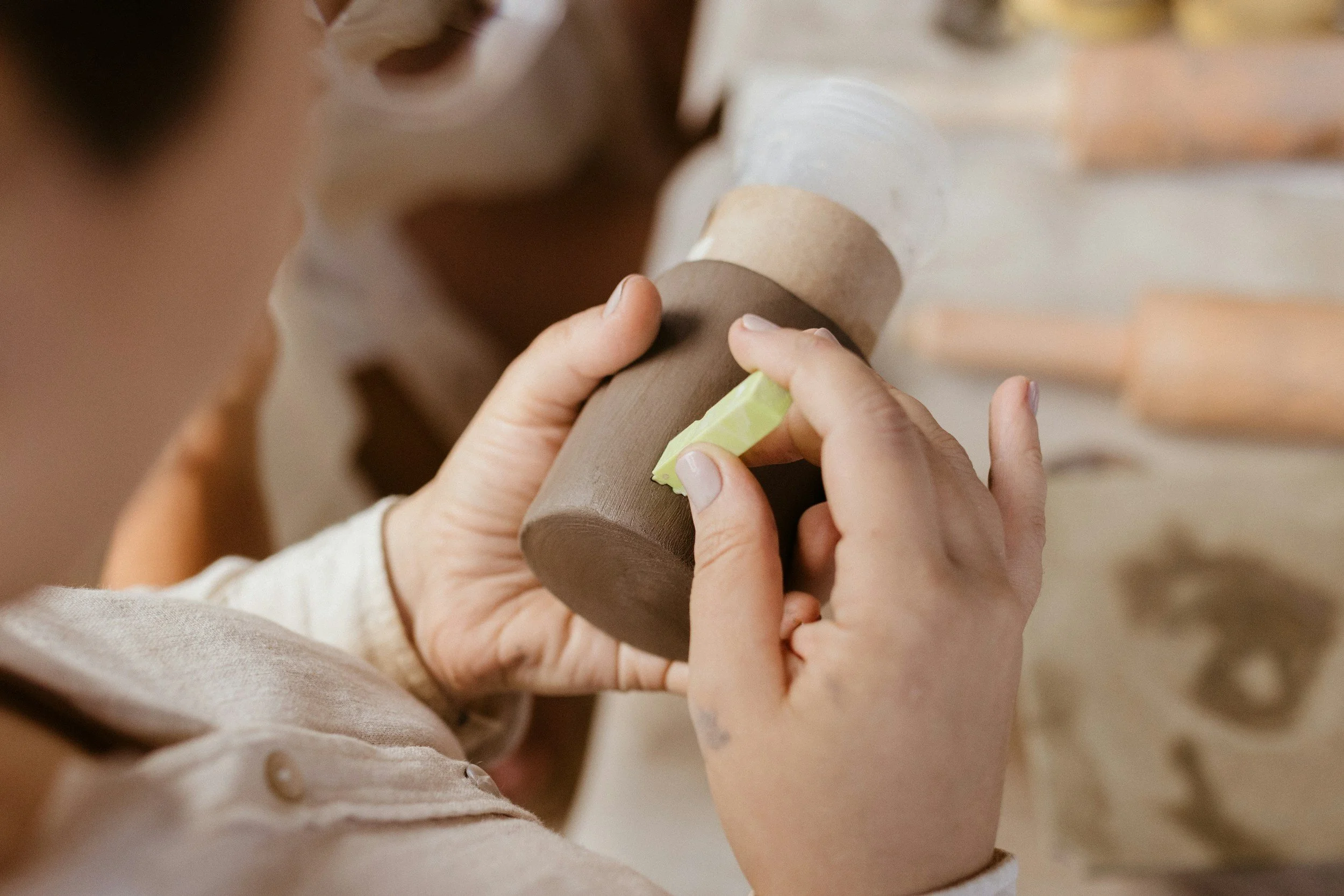
One of the most overlooked benefits of clay is how it naturally builds sustained attention, something increasingly challenging in our screen-saturated world.
Clay work is both active and calming. It requires effort—hands genuinely working, muscles engaging—but it doesn't demand speed or urgency. There's no timer. No score to beat. A child can work for five minutes or fifty, and both are perfectly valid.
I think about a first grader who struggles enormously with attention. Give her a worksheet, and she's done in thirty seconds, complete or not. Sit her down for a story, and she's bouncing, touching everything. But give her clay? I've watched her work for forty-five minutes straight, completely absorbed, her whole body quiet, focused and presently engaged in the task.
The constant proprioceptive feedback—the push and pull, effort and release—provides exactly the organizing sensory input her nervous system needs to maintain attention. The resistance keeps her hands busy and proprioceptors activated, which keeps her arousal level in that just right zone where focus becomes possible.
The Gift of Endless Repair
Clay is endlessly repairable. If something breaks, it can be pressed back together. If a shape fails, it can become something else. If an idea doesn't work, the clay doesn't remember.
So many students carry deep sensitivity to mistakes, in environments where effort is constantly evaluated, where work is displayed and compared, where grades leave permanent marks. For these children, fear of getting it wrong becomes paralyzing.
Clay offers a radically different message through the hands: Nothing is ruined. You can keep going. Your mistakes don't define what's possible.
I think about a kindergartner who would barely touch art materials because she was so worried about "messing up." Give her a worksheet, and she'd freeze, asking three times if she was doing it right. Hand her markers, and she'd choose colors that barely showed up so mistakes wouldn't be visible.
But with clay? She'd spend thirty minutes shaping and reshaping the same lump, narrating to herself: "Oops, that's okay. I'll just smoosh it back. There we go. Oh, that didn't work. Let me try this instead."
The clay gave her permission to experiment that no amount of teacher reassurance could provide. The permission wasn't coming from an adult who might withdraw it, it was coming from the material itself.
How Capacity Actually Grows
Building new capacity in the nervous system doesn't happen through big breakthroughs or taught strategies. It happens through repetition of small, safe experiences repeated over and over until the nervous system learns a new pattern (Perry, 2009).
Clay provides dozens of these micro-experiences in a single session. Each time a child works with clay, they're practicing effort and release, disruption and repair, frustration and persistence, engagement without needing a perfect outcome.
Each experience is small. Each is safe. But together, over time, they add up.
You start to notice it in unexpected moments. The student who used to crumble at the first sign of difficulty now takes a breath and tries a different approach. The child who needed constant reassurance begins to trust their own hands. The one who could only focus for five minutes finds themselves working for forty without looking up.
They haven't been taught a new strategy. Their nervous systems simply practiced something different and practiced it so many times through clay that it's becoming their new baseline normal.
Why This Matters in Today's Classrooms
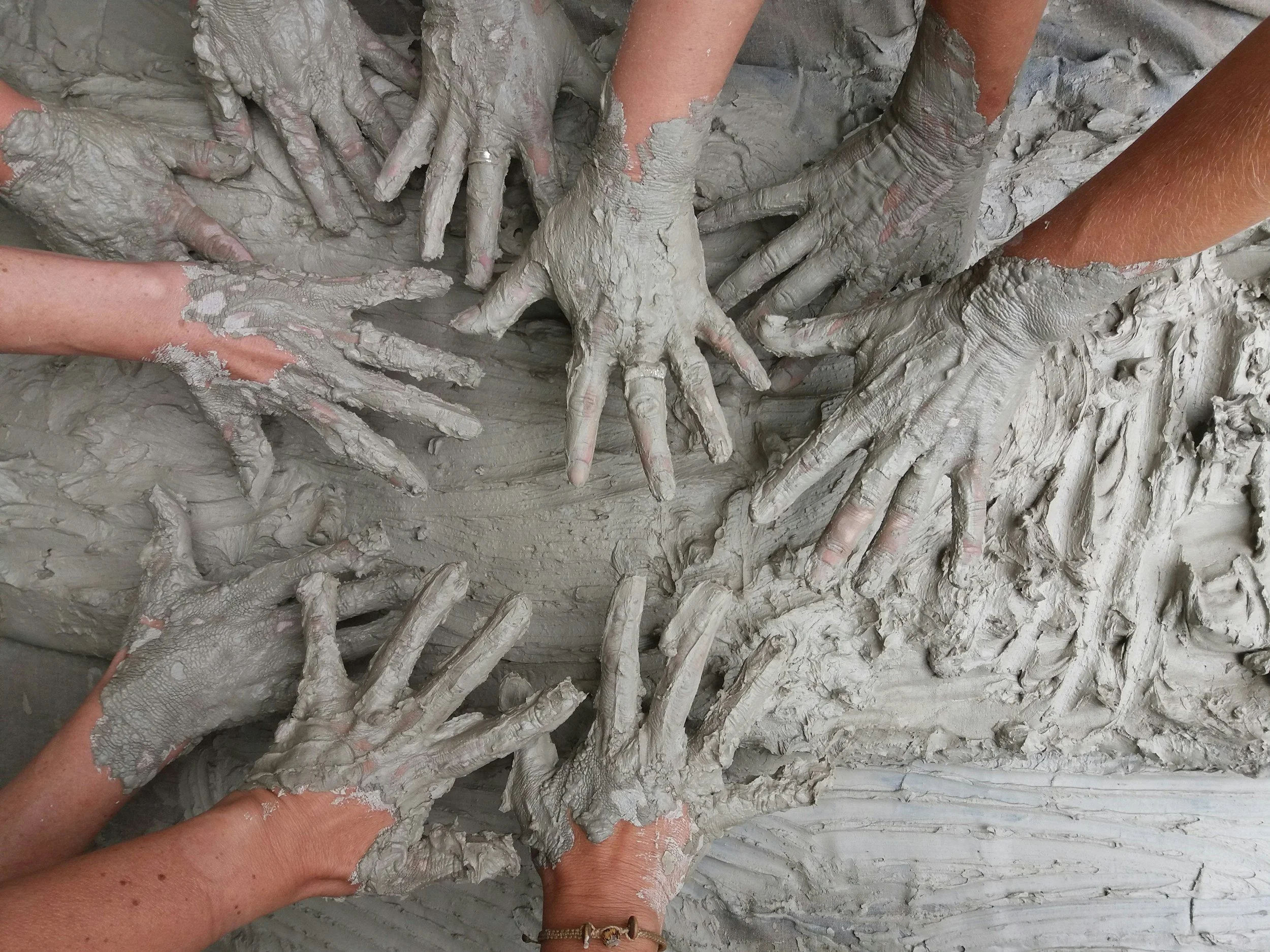
Our classrooms are carrying more nervous system load than ever. Children arrive with higher baseline stress, less experience with unstructured play, fewer opportunities to work through frustration on their own terms.
When students are already operating near their capacity, they don't have the internal resources for tools that demand insight or verbal processing. Strategies like "use your words" require access to the prefrontal cortex—the thinking part of the brain. But when a child is dysregulated, that part is often offline (Porges, 2011).
Clay doesn't ask students to self-regulate through willpower. It doesn't demand calm or require emotional vocabulary. It simply offers a place to build strength, quietly through the hands.
And because it works through doing rather than thinking, it's accessible to every child, regardless of language skills, cognitive development, or ability to articulate feelings.
A Foundation, Not a Break
What if clay isn't a break from learning, but the foundation for it?
When a child has greater capacity to stay with difficulty, they can engage more deeply with academic challenges. When they trust that mistakes can be repaired, they're willing to take risks in their thinking. When their nervous system knows how to move through frustration, they can persist through tricky problems and confusing concepts.
The resilience they're building with clay transfers to everything else. Not because we told them it would, but because their bodies learned a different way of being.
This is why clay deserves a place in every classroom—not tucked away as an occasional treat, but present and available as a foundational tool for building the very capacities that make learning possible.
Moving Forward
If we only think of regulation as calming down, we miss the deeper work available to us. Sometimes what children need isn't relief from difficulty, it's experience navigating it. Not comfort, but competence. Not rescue, but resilience.
Clay supports both the immediate need for regulation and the long-term building of capacity. It helps activated children find their way back to calm through organizing proprioceptive input. But more importantly, more lastingly, it helps all children build the internal resources they need to navigate a world that will always include challenge.
And it does this without lectures, without strategies, without any demand to understand or articulate what they're learning. It simply asks: touch this. Work with this. See what your hands can do.
In that simple invitation, children find something they desperately need: a chance to build strength through struggle, patience through practice, and trust through experience that they are capable of so much more than they knew.
That's why clay holds such a unique place in education, because sometimes the most important learning happening in your classroom isn't visible on paper. Sometimes it's happening in a child's hands, one small moment of challenge and repair at a time.
Bring Clay Based Regulation to Your Class
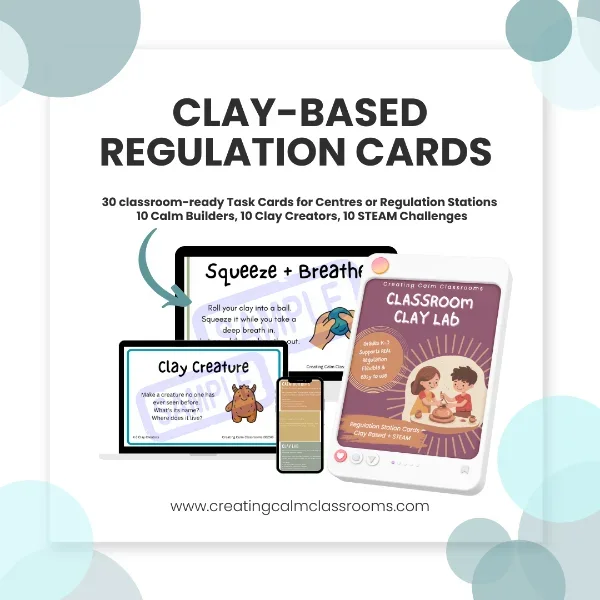
If this resonates, you may be interested in our Clay Cards. They’re designed to help anchor clay-based regulation into the rhythm of the day, translating the neuroscience into simple, repeatable classroom practice. Many primary classrooms already have a Play-Doh or clay center—these cards add structure and intention, with gentle STEM- and SEL-informed prompts built in. They’re used by educators, homeschoolers, and parents looking to make sensory play more supportive and purposeful.
References
Elbrecht, C. (2021). Healing trauma in children with Clay Field therapy. North Atlantic Books.
Elbrecht, C., & Antcliff, R. L. (2014). Being touched through touch. International Journal of Art Therapy, 19(1), 19-30.
Hartanto, T. A., et al. (2016). Physical activity and cognitive control in ADHD. Child Neuropsychology, 22(5), 618-626.
Kimport, E. R., & Robbins, S. J. (2012). Efficacy of creative clay work for reducing negative mood. Art Therapy, 29(2), 74-79.
Perry, B. D. (2009). Examining child maltreatment through a neurodevelopmental lens. Journal of Loss and Trauma, 14(4), 240-255.
Porges, S. W. (2011). The polyvagal theory. W. W. Norton & Company.
Van der Kolk, B. (2014). The body keeps the score. Penguin Books.
