Why You Can’t Regulate Your Students When You’re Dysregulated
Why You Can’t Regulate Your Students When You’re Dysregulated
You are the thermostat for your classroom’s emotional climate. When you’re running on empty, the system still expects you to somehow fill everyone else up. And let’s face it: we’re living in an incredibly unstable world with the deck stacked against us most days.
But what if understanding the science behind what’s happening could actually make your days easier?
It Starts Before You Even Get to School
You wake up and there’s no coffee. The favorite jeans you planned to wear are still in the hamper. Traffic is heavier than usual, and you hit every red light. Your partner said something that rubbed you the wrong way, and you’re still replaying it in your head as you pull into the parking lot.
None of these things are catastrophic on their own. But nobody talks about this: dysregulation snowballs. And as a teacher, you rarely get a moment to let it go.
Each small stressor adds to your nervous system’s load. You’re carrying the coffee disappointment into the traffic frustration. You’re bringing the traffic frustration into your classroom. When you don’t have a chance to discharge that accumulated tension, to let your body complete the stress cycle, it doesn’t just disappear. It compounds.
We often feel like there must be something wrong with us when we suddenly can’t handle the pressure anymore. But it is really important to understand that this isn’t a personal failing. This is what happens to human beings under chronic stress with no time to recover. Because…
Then a student talks back. Or throws a pencil. Or refuses to sit down for the third time.
Suddenly, your response is bigger than the moment requires. Not because you’re a bad teacher. Not because you don’t care. Because you’re not just responding to this student in thisf moment. You’re responding from a nervous system that’s been in overdrive since the alarm went off this morning.
Your voice gets sharp. The whole class feels the shift in energy, and now three more students are off task. Two are arguing. One is shutting down. The classroom that felt manageable five minutes ago suddenly feels like chaos.
You already knew something was off. You’ve felt it a thousand times. The science just gives you language for what you’ve been experiencing, and more importantly, it shows you why taking care of your own nervous system isn’t selfish. It’s strategic and smart. When you’re regulated, your day gets easier. Your students respond better. You get to go home with energy left.

Mirror Neurons: The Science Behind What You Already Know
You’ve noticed this pattern: On days when you feel grounded and calm, your students seem easier. They respond to redirections. Transitions go smoothly. The same kids who usually push back are cooperative. It is a good day. You feel accomplished by the time you’re ready to go home.
And on days when you’re already maxed out? Even your “easy” class feels impossible.
And you need to know that there’s actual neuroscience behind what you’ve been experiencing.
In the 1990s, researchers discovered mirror neurons, specialized brain cells that fire both when we perform an action and when we observe someone else performing it. They’re why yawns are contagious and why watching someone stub their toe makes us wince.
And it gets better. Mirror neurons don’t just reflect actions. They reflect emotional states too.
When you’re standing in front of your classroom feeling anxious or overwhelmed, your students’ mirror neurons are firing in response. Their brains are literally picking up on your emotional state. They feel your tension in their own bodies before you even speak.
This is why your tone of voice matters more than your actual words. Think about all the ways that you can say the phrase “Please sit down”. I bet you were easily able to come up with at least five different tones and body postures and a variety of situations you could apply it too.
You can say “Please sit down” with patient words, but if your jaw is clenched and your shoulders are tight, students feel the disconnect. Their nervous systems register something’s wrong, even if they can’t articulate what.
But I want to be very clear, none of this means that you’ve done anything wrong. At all. It means you are human. And humans are wire to transmit and receive emotional states. That’s how we’ve survived as a species.
The invisible weight you’ve been carrying? Your students are carrying it too. Which means when you regulate yourself, you’re not just making your own day better. You’re making it better for everyone.
Dr. Bruce Perry: Why You Can’t Regulate Your Students When You’re Dysregulated
Dr. Bruce Perry’s framework Regulate, Relate, Reason explains exactly why your hardest days feel so impossible.
When you’re already dysregulated, you can’t do the first step. You can’t be the regulating presence your students need. You’re trying to teach, redirect, and manage from a nervous system that’s in threat mode. Every interaction requires reasoning with students whose brains need regulation first. But you can’t offer what you don’t have.
Perry’s research on “neuroception” shows why this matters so much. Neuroception is your students’ subconscious safety radar. Their nervous systems are constantly scanning the room, and primarily, they’re scanning you. Not your words. Not your lesson plans. You.
When you walk in calm, even if you’re tired, your steady presence tells their nervous systems they’re safe. Your breathing is even. Your voice is predictable. Your body language is grounded. They can relax. They can learn. The regulate-relate-reason sequence can actually happen because you’re providing the foundation.
When you walk in already maxed out, everything changes. Your shallow breathing, your tight jaw, your sharp tone, these send signals of threat. Students’ nervous systems respond before their thinking brains can process what’s happening. They move into fight, flight, or freeze. Now you’re trying to teach and manage 25 to 30 students whose brains have gone into survival mode, all while your own brain is doing the same thing.
You’re being asked to co-regulate dozens of nervous systems when no one is regulating yours. The system expects you to be the calm in the storm while simultaneously creating the storm conditions that make calm impossible.
This is why you can’t regulate your students when you’re dysregulated. Not because you’re not skilled enough or caring enough. Because biology doesn’t work that way.
Mary Helen Immordino-Yang: Why Some Days Feel Impossible
Neuroscientist Mary Helen Immordino-Yang has spent years studying how emotion and learning are connected, and her research confirms what you experience daily: they’re inseparable.
When students feel emotionally safe, their brains are open to learning. The prefrontal cortex, the part responsible for reasoning, problem solving, and self control, is online and accessible.
When students feel unsafe or stressed, their brains shift resources away from learning and into survival. The amygdala takes over. Higher order thinking shuts down.
This is the science behind those frustrating moments when a student who was fine yesterday can’t handle anything today. When your whole class seems to have forgotten everything you taught them. When you feel like you’re speaking a different language and no one understands.
It’s not them. It’s not you. It’s nervous systems responding to an environment that doesn’t feel safe enough for learning.
Your emotional state shapes whether that safety exists. When you’re regulated, you create the conditions for learning. When you’re depleted, which is most of the time given what teaching demands, it’s exponentially harder for everyone.
Understanding why some days feel so much harder than others, even when you’re doing the exact same things, gives you power. You can’t control everything, but you can influence the emotional climate of your room. And that starts with you.
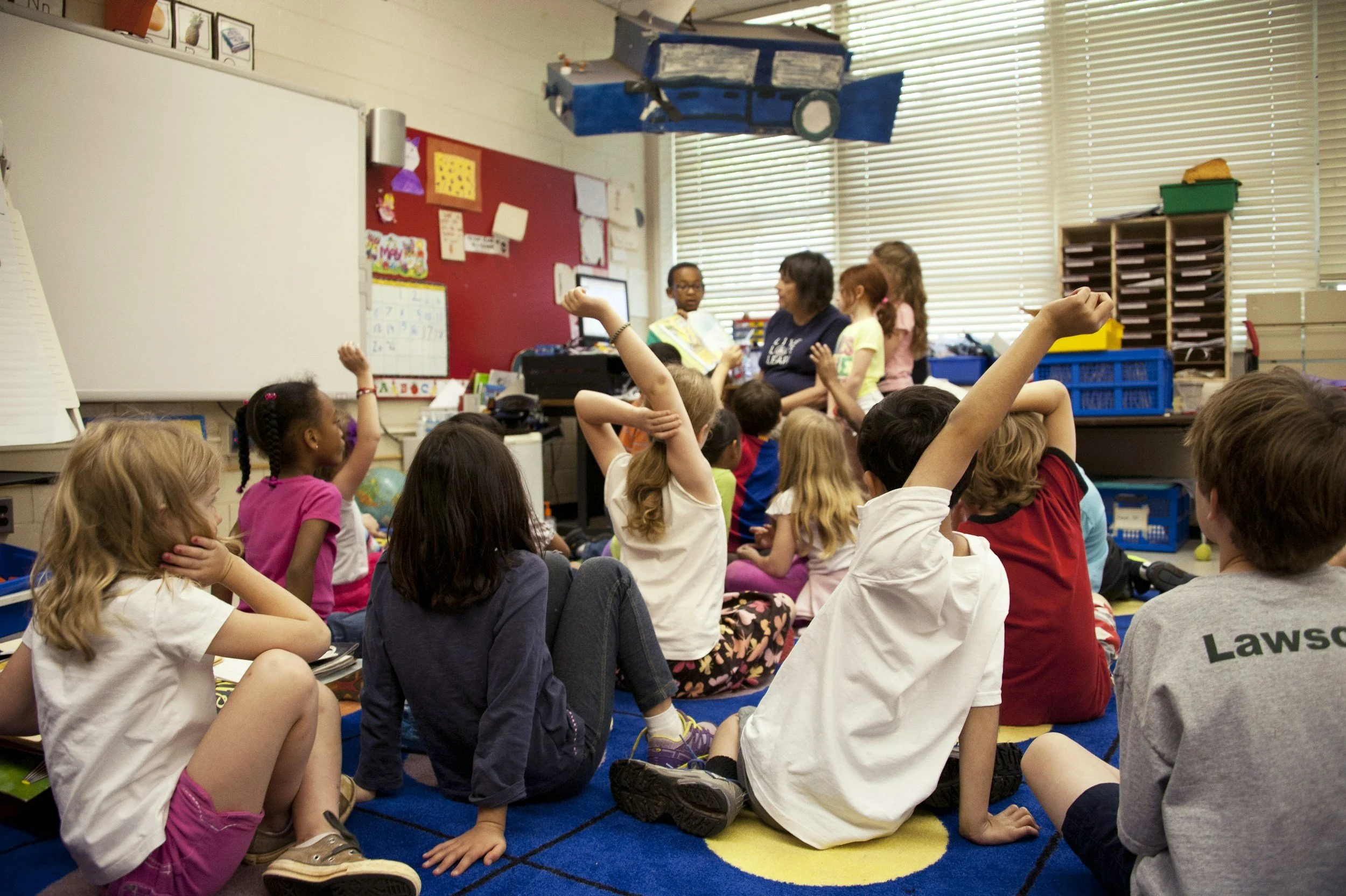
What This Actually Looks Like in Your Classroom
Let’s trace what happens on a tough day:
Morning: You arrive already running on fumes. Maybe you didn’t sleep well. Maybe you’re worried about an observation or dealing with something hard at home. Maybe it’s just February and you’ve been sprinting since August.
First moment: A student talks during your instructions. Normally, you could redirect them easily. But today, your nervous system is already maxed out. The talking feels like sandpaper on your last nerve. Your response comes out sharper than you meant.
The ripple: The student hears your tone and feels attacked. They respond defensively. Now you’re frustrated, not just at them but at yourself for snapping. Your body tenses. Your voice gets harder.
The spread: Other students sense the tension. Mirror neurons fire. Three students who were fine thirty seconds ago are now activated too. One starts tapping their pencil in that way that makes your teeth hurt. Another gets out of their seat. A third completely shuts down.
The spiral: You’re managing multiple behaviors now while dysregulated yourself. Every redirection feels like pushing a boulder uphill. Students push back harder because they’re dysregulated too. The classroom that felt manageable ten minutes ago now feels like chaos.
The negativity bias kicks in: Once you’re in this state, you start seeing everything through that lens. You notice every off task behavior, every eye roll, every sign that things are falling apart. What you focus on grows. Your brain is scanning for threat now, so that’s all it sees. The three students who *are* following directions become invisible. The lesson moment that actually went well gets erased by the struggle that followed.
The aftermath: By lunch, you’re exhausted and discouraged. You feel like you’re failing. And you still have half a day to go.
If this sounds familiar, you’re not alone. It’s not because you’re not good enough. It’s because you’re a human being with a nervous system, trying to regulate 25 other nervous systems in a system that gives you virtually no support to do so.
The cycle doesn’t start with student behavior. It starts long before that. And understanding this gives you options you didn’t have before.

What You Can Actually Do (That Makes Your Day Easier)
These aren’t “extra things to add to your plate.” These are tools that protect you and make your actual teaching easier. When you’re regulated, students respond better, behaviors de-escalate faster, and you get to leave with energy still in your tank.
Pick one. See what happens.
Before School: Micro Moments of Regulation
You don’t need a 30 minute morning routine. You need two minutes:
- Three intentional breaths before you leave your car (inhale for 4, exhale for 6). This activates your parasympathetic nervous system and tells your body it’s safe.
- Feel your feet on the ground as you walk to your classroom. Just notice them. This simple act brings you into the present moment instead of the spiral of everything you have to do.
- One song that makes you feel more like yourself. Music literally changes your brain chemistry. Bonus points for EDM, 432hz or classical music.
- Set a realistic intention: Not “I’ll stay calm all day” but “I’ll notice when I’m getting activated and pause.”
In the Moment: Tools That Actually Work
When you feel yourself getting activated:
- The physiological sigh: Two quick inhales through the nose, one long exhale through the mouth. Researchers at Stanford found this is the fastest way to shift your nervous system from threat to safety. It’s not just “taking a breath.” It’s biology working for you.
- The pause: Count to three before responding. That’s it. Three seconds for your prefrontal cortex to come back online. Three seconds is the difference between reacting from your amygdala and responding from your thinking brain.
- Orient to the present: When you feel the spiral starting, when your brain is scanning for everything going wrong, deliberately look around your room. Find three things that are going well. The student who is on task. The anchor chart you worked hard on. The plant on your desk that’s still alive. This interrupts your brain’s negativity bias and actually changes your neurochemistry. It sounds almost too simple to work, but the science is clear: what you focus on grows. When you deliberately shift your attention to what’s working, your nervous system receives the message that you’re not actually under threat. This breaks the chemical stress response and brings you back to a state where you can think clearly.
- Name it silently: “I’m dysregulated right now. This feeling will pass. I’m safe.” Naming the emotion reduces its intensity. Brain scans show this literally calms the amygdala.
During Class: Co-Regulation That Doesn’t Drain You
You don’t have to be perfectly calm. You just have to be present:
- Lower your voice instead of raising it. I know it’s counterintuitive, but it works. When you speak more quietly, students have to regulate themselves to hear you. Plus, it keeps your own nervous system calmer.
- Slow down your words. This regulates you while you’re regulating them. Your nervous system and your students’ nervous systems both respond to the pace of your speech.
- Model the breath: “I’m going to take a deep breath. Join me if you want.” Some will, some won’t, and that’s fine. You’re not making them. You’re showing them what regulation looks like. And focus on the long exhale which downshifts the parasympathetic nervous system.
- Predictable responses: When you can, use the same calm phrase for the same situations. Your consistency becomes their safety. It also takes the decision making load off your already taxed prefrontal cortex.
Their behavior is information about their nervous system, not a judgment of you. When you can hold that perspective, it changes everything.
After School: Let It Go
You need to complete the stress cycle. Your body is still holding everything from the day:
- Move: Walk to your car the long way. Dance to one song in your classroom. Stretch for 60 seconds. Movement tells your body the threat is over. This isn’t optional self care fluff. This is how you discharge the stress hormones still flooding your system.
- Vent with a timer: Tell a trusted colleague what happened, but set a limit. Five minutes, then shift to something else. Re-telling the story without a time boundary re-traumatizes your nervous system.
- One thing that’s just yours: Ten minutes of something that reminds you you’re more than a teacher. A podcast, a game on your phone, calling a friend. Something that brings you back to yourself.
For more specific nervous system tools, check out my posts on [micro resets](#) and [discharge practices for burnout](#).
What This Means for You
We’re living in uncertain times. The world feels unstable. The demands on teachers keep growing while the support keeps shrinking. You’re dealing with more trauma, more needs, more expectations than ever before. Of course you’re dysregulated. That’s the only sane response to an insane situation.
But when you understand what’s actually happening in your nervous system and your students’ nervous systems, you get options. You’re not powerless. You can’t control the system, but you can influence your small corner of it.
When you’re regulated, everything gets easier. Not easy. Easier. Students respond better to redirections. Behaviors de-escalate faster. Learning actually happens. You notice the good moments instead of just the hard ones. You leave with something left in your tank.
This isn’t about being perfect or transcending your humanity. This is about survival. This is about making your actual day to day experience more manageable. This is about protecting yourself so you can keep showing up.
Your regulation isn’t just good for your students. It’s good for you. You deserve to feel steady. You deserve to go home without being completely wrecked. You deserve tools that actually work.
You Already Knew This
The science just gave you language for what you’ve been living. You already knew that some days are harder than others for reasons that have nothing to do with your lesson plans. You already knew that your mood affects the room. You already knew that when you’re maxed out, everything feels harder.
Now you know why. And when you know why, you can work with it.
The next time you feel yourself spiraling, remember: this is your nervous system doing exactly what it evolved to do. You’re not broken. You’re responding normally to difficult circumstances. And you have more power than you think to shift what happens next.
Start small. Pick one tool. Notice when you’re activated. Be gentle with yourself on the hard days.
When you regulate yourself first, you’re not just making your own day better. You’re changing the entire emotional climate of your classroom. You’re creating the conditions where learning can happen. You’re modeling for your students what it looks like to be human and still be okay.
That’s not a small thing. That’s everything.
Want something practical you can actually use?
I gathered my top 5 micro-resets into a free guide to help you regulate yourself first—and then bring those same tools into your classroom.
----
*If this gave you language for what you’ve been experiencing, save it for the days when you need the reminder. And if you know a teacher who needs to hear this, please share it. We’re all in this together.*
