What Happens in the Brain When Children Work With Clay
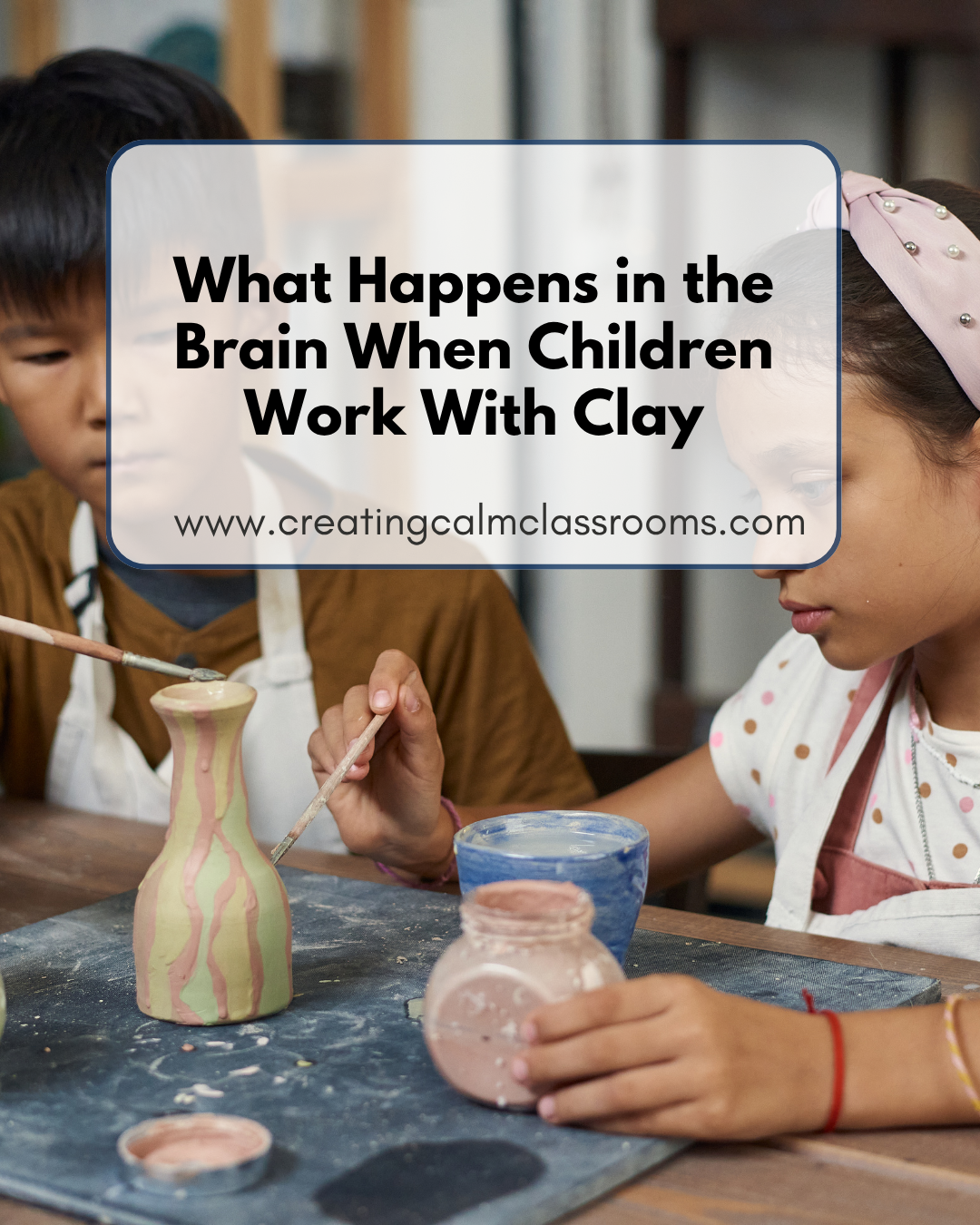
If you've ever watched a child sink their hands into a ball of clay and visibly exhale, you've already witnessed the neuroscience — you just didn't have the language for it yet.
Clay is so much more than an art material. It's a regulation tool. And what happens in a child's brain during a clay session explains why no amount of "use your words" or "take a deep breath" can do the same job.
Start at the Bottom of the Brain
Bruce Perry's neurosequential model of development teaches us something fundamental: the brain is hierarchical. Before a child can think, reflect, or regulate emotionally — all those higher-order skills we desperately want them to have in a classroom — the lower brain has to feel safe first. And when we speak of safety we’re speaking of more then just physical safety; children need to have emotional and intellectual safety as well.
All of this means the brainstem and the sensorimotor regions need to be online and settled. You can't reason your way into a regulated nervous system. You have to move, touch, and feel your way there.
And clay works from the bottom up.
When a child pushes, pulls, coils, pounds, or presses clay, they're activating the somatosensory cortex — the brain region responsible for processing touch and body awareness. The proprioceptive feedback from working with clay (the resistance, the weight, the temperature) sends signals along the spinal cord and into the brainstem. The nervous system begins to orient. Arousal levels shift. The body starts to regulate without any language or dissection of emotion necessary.
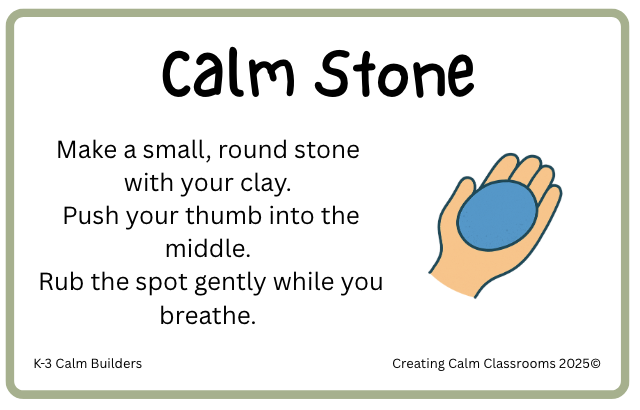
Sample activity card from the Classroom Clay Lab, showing how regulation can be built into everyday classroom moments. Download all 30 cards here.
The hands-brain connection is older than language
Our hands have more sensory nerve endings per square centimetre than almost any other part of the body. They send an extraordinary volume of information to the brain, and the brain devotes a disproportionate chunk of the sensory cortex to processing it. This is sometimes called the cortical homunculus: a map of the body as the brain experiences it, where the hands are enormous.
Clay engages that entire system. The slow, repetitive, bilateral movements of working with clay — both hands, alternating, rhythmic — activate the same neural pathways that rocking, breathwork, and other sensorimotor regulation tools do. It's not woo. It's what the brain was built for.
Cornelia Elbrecht's work in Clay Field Therapy goes further, showing that working with natural materials at the sensorimotor level can help children access and process experiences that have no verbal form yet. Children who have trouble naming what's wrong often have no trouble showing it in clay.
Regulation Before Learning
Here's what this means practically. A dysregulated child sitting at a desk is not a child who's choosing to be difficult. They're a child whose brainstem is running an alarm. No amount of instructions, incentives, or consequences will reach the prefrontal cortex until that alarm quiets down.
Clay gives the nervous system something real to work with. Tactile input. Bilateral movement. Sensory resistance. These are the inputs that speak directly to the lower brain and they speak in a language it actually understands.
What we see in schools when Mud Makers sessions happen isn't magic. It's what happens when you give the nervous system what it actually needs: a bottom-up path to calm.
Regulated kids can learn. Dysregulated kids are just trying to survive the room.
This is the premise behind everything we do at Creating Calm Classrooms. Not art for art's sake. Not clay because it's fun (though it is). Clay because the nervous system is the curriculum and every other subject gets easier once it's tended to first.
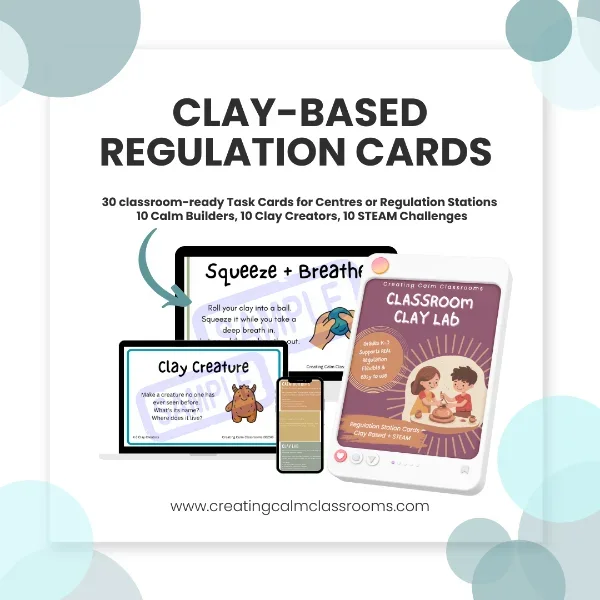
The Clay Card Regulation Pack gives you 30 ready-to-use Task Cards for mindfulness and STEM in your K-3 room. Everything you need to start using clay as a regulation tool. Download all 30 cards here.
