Five Powerful Benefits of Clay Work for Creating Calm Classrooms
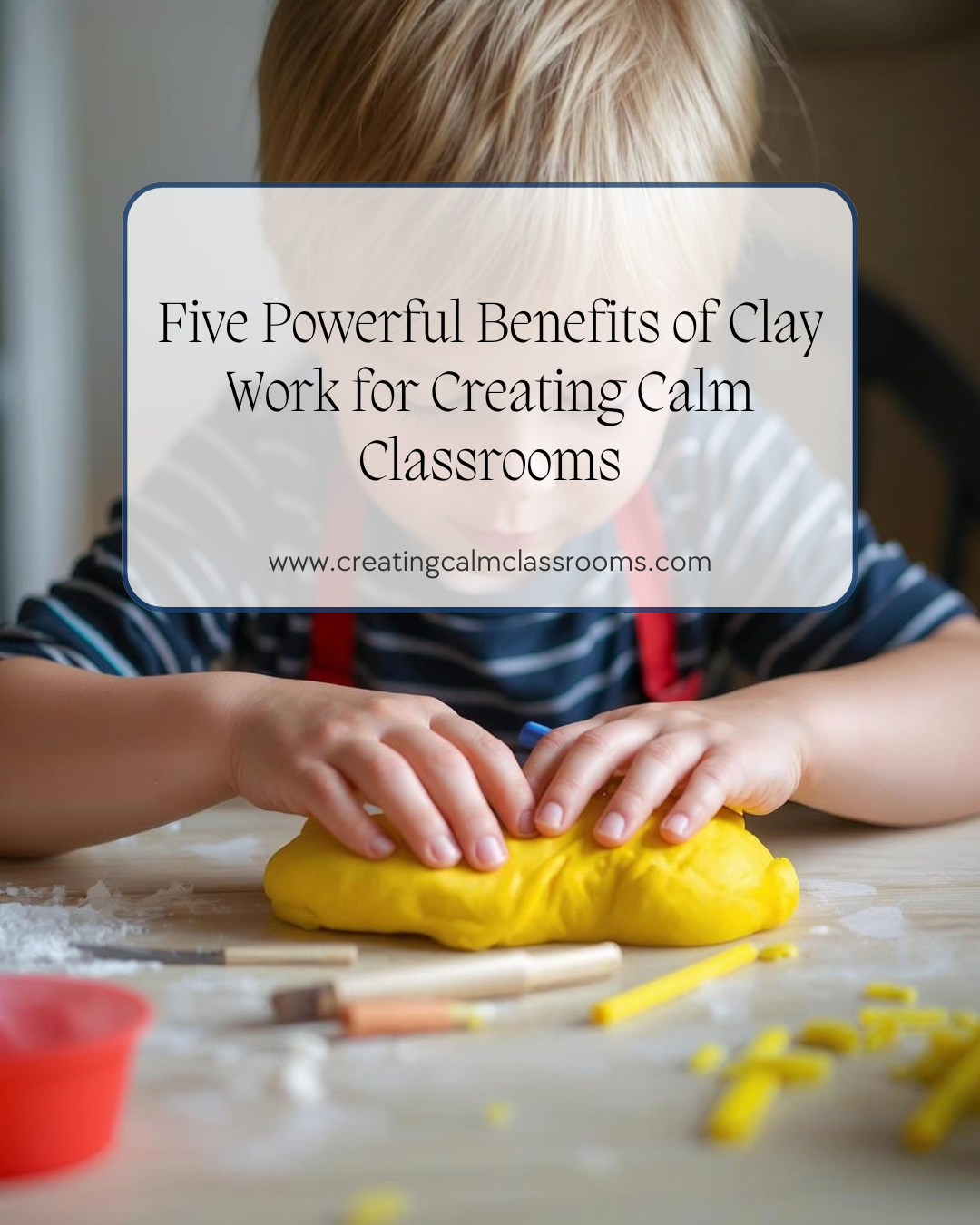
It's 1:47 PM on a Tuesday, and your classroom feels like it's vibrating. Three students are tapping pencils in different rhythms. Someone's rocking their chair back and forth. Two kids are whispering urgently about something that happened at lunch, and another is staring blankly at their math worksheet, chewing their sleeve. You've already tried a brain break, adjusted the lighting, and given two reminders about expectations, but the collective energy in the room is still crackling like static electricity.
Sound familiar?
What if I told you that a simple lump of clay, something humans have worked with for thousands of years, could be one of the most powerful tools in your calm classroom arsenal? Not as a reward, not as an art project, but as a legitimate regulatory tool that actually changes what's happening in your students' nervous systems.
Let me explain why clay work isn't just another trendy classroom strategy, but a research-backed intervention that addresses the root of dysregulation.
1. Bilateral Stimulation Literally Calms the Nervous System
Here's what most teachers don't realize: when students work with clay using both hands simultaneously, they're engaging in bilateral stimulation—a technique that therapists have used for decades to reduce anxiety and process stress.
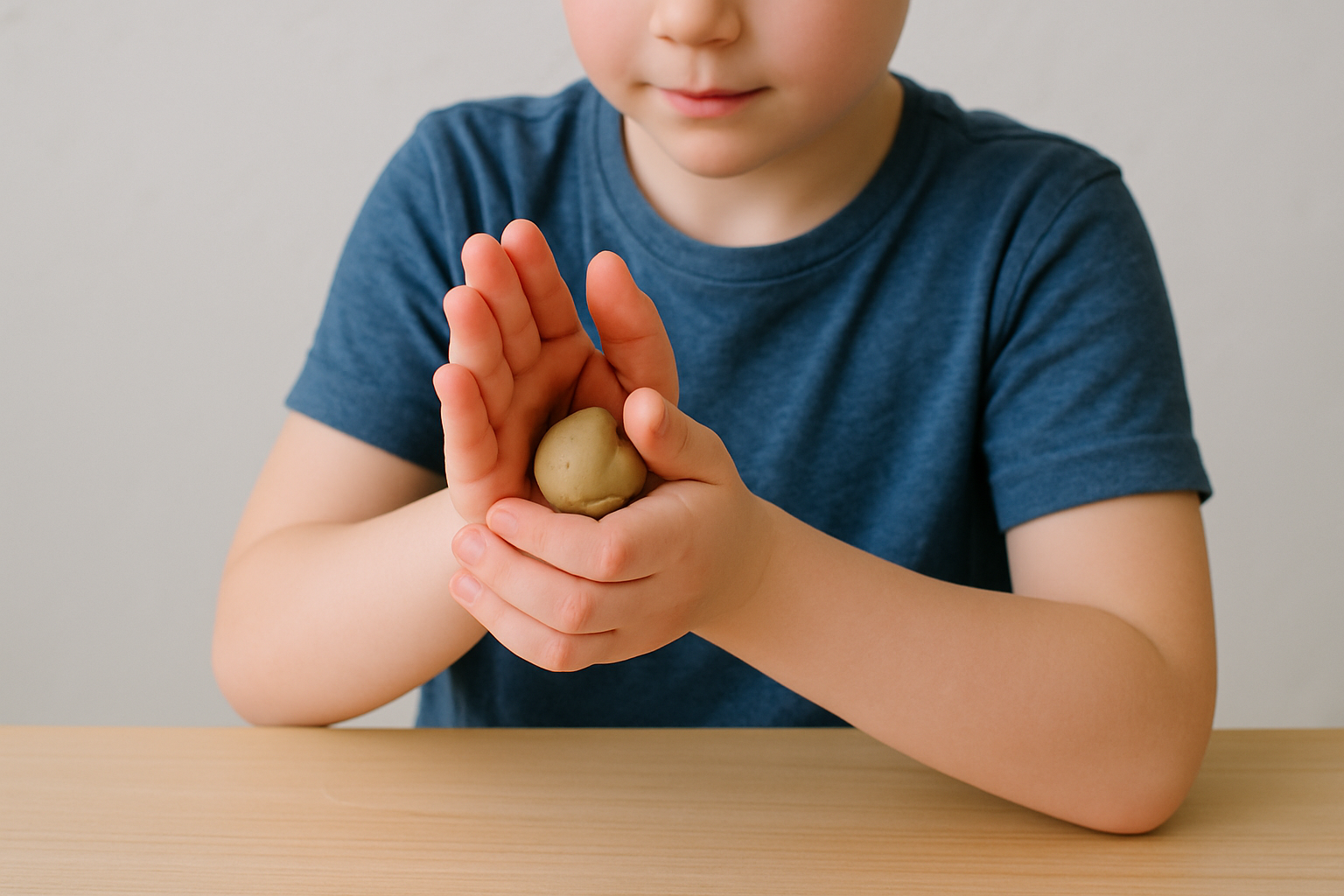
When both hemispheres of the brain are activated through coordinated hand movements (think rolling, pinching, squeezing, shaping), the brain shifts out of fight-or-flight mode and into a more regulated state. Studies on bilateral movement demonstrate that coordinated use of both sides of the body helps calm the nervous system and reduce stress responses. Clay work brings this neurological benefit into the classroom in an accessible, age-appropriate way.
Think about what happens when a student rolls clay between their palms. Both hands are engaged in a rhythmic, coordinated movement. The pressure required to shape the clay provides proprioceptive input (information about where their body is in space), which is inherently calming to the nervous system. The repetitive nature of the work becomes almost meditative, allowing racing thoughts to settle and cortisol levels to drop.
In practice: Keep a small container of clay at each table or desk cluster. When you notice a student becoming dysregulated (bouncing their leg, fidgeting excessively, or showing signs of mounting frustration) offer them clay to work with during instruction or independent work time. You're not asking them to create anything specific; you're giving their hands something to do so their brain can focus.
2. A No-Fail Creative Outlet That Reduces Performance Anxiety
Drawing has a finished product problem. So does writing. When you ask students to express themselves through these mediums, there's an immediate internal evaluation happening: Is this good enough? Does it look right? Will others judge it? For anxious students or those with perfectionist tendencies, this performance pressure can be paralyzing rather than calming.
Clay is beautifully forgiving in a way that two-dimensional art simply isn't. You can squish it, reshape it, start over, and try again without any evidence of your mistakes. There's no eraser mark, no crossed-out section, no white-out blotch. The material itself invites experimentation without consequence, which fundamentally changes how students approach the creative process.
This matters more than you might think. When students feel safe to explore without judgment, including their own harsh self-judgment, they enter what psychologists call a flow state. Flow states are characterized by complete absorption in an activity, loss of self-consciousness, and a distorted sense of time. They're also incompatible with anxiety. You simply cannot be in flow and simultaneously spiralling about your perceived inadequacy.
In practice: During high-stress periods like testing weeks or after difficult transitions, offer clay exploration as a station activity. The only instruction: "See what you can make with the clay. It doesn't have to be anything, just explore." Remove the pressure of product entirely. Some students will create recognizable objects; others will simply enjoy the sensory experience. Both outcomes are equally valuable for regulation.
3. Sensory Regulation for All Types of Learners
Every classroom contains a spectrum of sensory needs. You have students who are sensory-seeking—the ones who seem to need constant movement, who touch everything, who can't keep their hands still. You also have sensory-sensitive students who become overwhelmed by too much input and need calming, predictable sensations. Then there's everyone in between, with fluctuating needs depending on their day, their sleep, their emotional state, and a hundred other variables.
Clay is remarkably versatile because it can meet different sensory needs simultaneously. For sensory seekers, it provides strong proprioceptive input—the kind of deep pressure and resistance their bodies crave. Pushing, pulling, and manipulating the clay gives them the sensory feedback that helps them feel grounded and present. For sensory-sensitive students, the smooth, cool texture can be soothing, and the predictable, controllable nature of the material feels safe rather than overwhelming.
Students with ADHD often benefit tremendously from having something in their hands while they listen or think. Rather than asking them to suppress their natural need for movement and stimulation, which actually impairs their cognitive function, clay gives them a regulatory outlet that works with their neurology, not against it. Research on fidget tools consistently shows that allowing controlled movement improves attention and information retention for students with attention differences.
For students on the autism spectrum, clay work can serve multiple functions: it's a predictable sensory experience, it can be part of a calming routine, and it provides a concrete, hands-on way to process emotions that might be difficult to verbalize.
In practice: Create a "sensory menu" that includes clay alongside other regulatory tools like fidgets, movement breaks, and quiet spaces. Teach students to recognize their own arousal states and choose tools that help them regulate. A student who's feeling understimulated might choose clay for the proprioceptive input, while an overstimulated student might use it for grounding. Self-awareness plus choice equals empowerment.
4. Builds Presence, Focus, and Grounding—Skills That Transfer Beyond Clay Time
One of the most valuable gifts we can give students is the ability to be present in the moment. In a world of constant notifications, racing thoughts, and anxiety about the future, presence is a learnable skill and clay work is a surprisingly effective teacher.
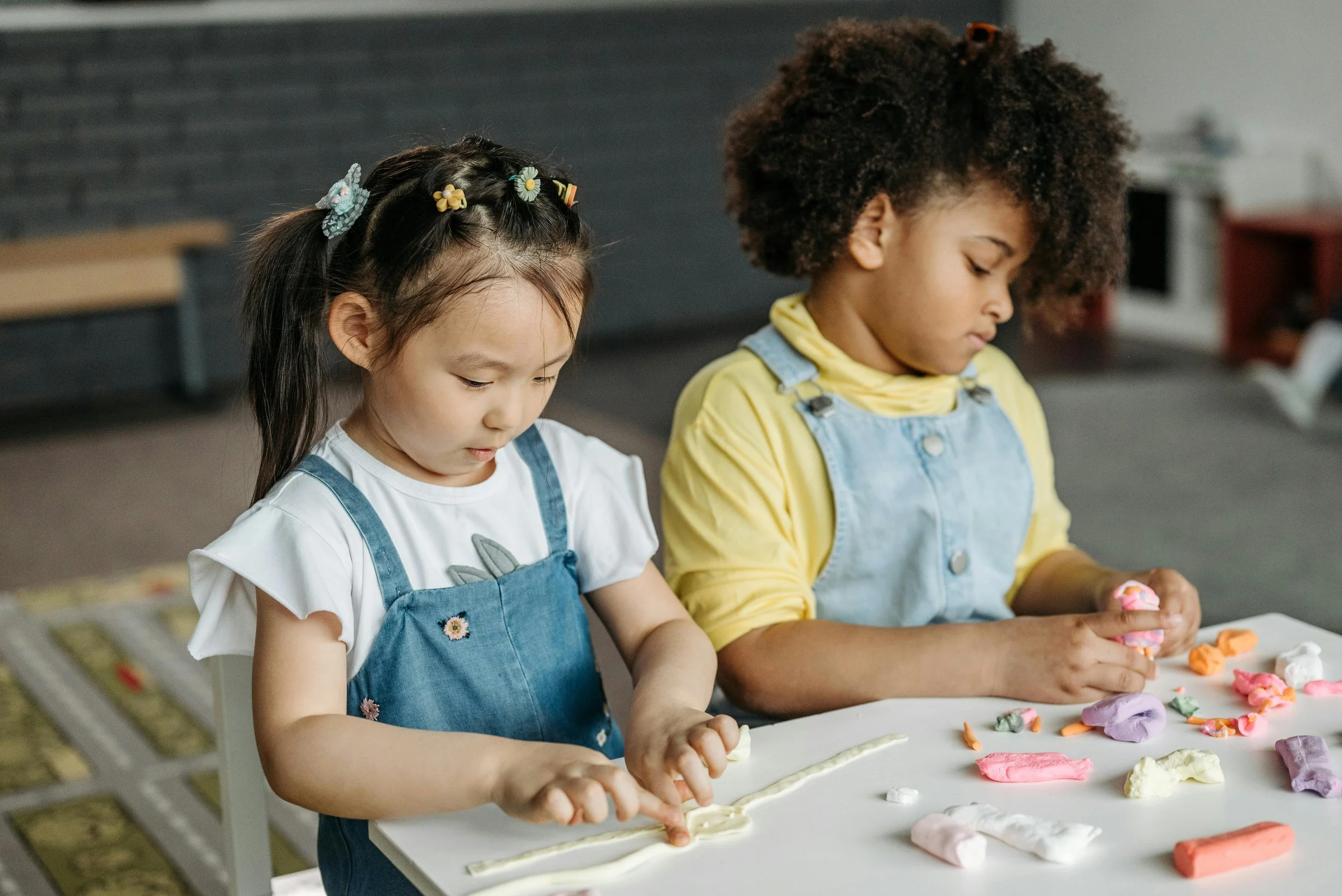
When students work with clay, they're required to pay attention to what's happening right now. How does the clay feel? Is it too dry? Too sticky? What happens when I press harder? Softer? The material demands their attention in a way that screens and worksheets simply can’t. This isn't passive consumption; it's active engagement with something real and responsive.
This quality of attention, focused, embodied, non-judgmental, is exactly what mindfulness practices aim to cultivate. But the advantage clay has over traditional mindfulness exercises is that it doesn't feel like one more thing you're asking students to do. They're not sitting cross-legged trying to clear their minds while secretly thinking about lunch. They're naturally absorbed in a tactile experience that pulls them into the present moment without force or instruction.
The neurological benefit here is significant. When students practice focused attention through clay work, they're strengthening neural pathways associated with concentration and emotional regulation. These aren't skills that only matter during art time—they transfer to every other part of their academic and personal lives. A student who learns to notice when their mind wanders while working with clay is developing the same metacognitive awareness that helps them catch themselves zoning out during math or spiralling into worry before a test.
Clay work also builds what psychologists call interoceptive awareness—the ability to notice what's happening inside your body. As students manipulate the clay, they become more attuned to the physical sensations in their hands, the tension in their shoulders, the rhythm of their breathing. This body awareness is foundational to self-regulation. You cannot regulate what you don't notice. Students who develop stronger interoceptive awareness through regular clay work become better at recognizing early signs of dysregulation in other contexts and intervening before they escalate.
In practice: Frame clay work explicitly as a focusing practice. Before students begin, guide them briefly: "As you work with the clay today, notice what it feels like in your hands. If your mind wanders to other things, just bring your attention back to the sensation of the clay." After clay time, do a quick reflection: "What did you notice? Was it hard to stay focused? Did anything surprise you?" These simple prompts help students recognize that they're not just playing; they're building real skills in attention and self-awareness.
5. Creates a Ritual of Calm for Transitions and Reset Moments
Transitions are where classroom calm goes to die. Moving from recess or the gym back to the classroom, shifting from one subject to another are dysregulation danger zones. Students are carrying energy, emotions, and stimulation from the previous activity into the new context, and we expect them to immediately flip a switch and be ready to learn. Some days this is possible and other day’s not so much.
But what if instead of fighting against this reality, you built in a transition ritual that actually helped students downshift their nervous systems? Enter: the clay ritual.
A ritual is different from a routine because it carries intention and consistency. When students know that after recess, they'll have three minutes to work with clay while you play soft music, their nervous systems begin to anticipate and prepare for that regulation. Over time, the ritual itself becomes a cue that signals "it's time to calm down now," and the transition becomes smoother with practice.
The beauty of clay is that it doesn't require setup or cleanup time that eats into instruction. Students can keep a small portion at their desk in a container or baggie. The ritual can be as simple as "Everyone take out your clay. We're going to spend two minutes working with it in silence while we transition into our next subject." Those few minutes can save you ten minutes of redirections and reminders.
In practice: Identify your most challenging transition times and build in a brief clay ritual. Start and end with a clear signal: a chime, a specific phrase, a dimming of lights. Keep the time short initially (5 minutes) and gradually adjust based on your students' needs. The consistency matters more than the duration.
Making Clay Work Practical in Your Classroom
I know what you're thinking: this sounds great in theory, but what about the mess? What about the cost? What about the student who will inevitably throw clay across the room?

Let's address the practical concerns head-on. Air-dry clay is inexpensive and can be reused repeatedly if stored properly in airtight containers or bags with a damp paper towel. Plasticine and Playdoh also offer similar benefits for our youngest students.
You don't need much, a golf-ball-sized portion per student is plenty. If mess is a concern, have students work on a paper plate or placemat that stays at their desk. As for behavioral issues, clay privileges can be earned and maintained through responsible use, just like any other classroom tool.
Start small. You don't need to overhaul your entire classroom management system overnight. Begin with offering clay to one or two students who you know struggle with regulation, and observe the impact. Expand gradually as you build systems and expectations. Talk with students about why you're introducing this tool and how it helps their brains and bodies work better. When students understand the purpose behind a strategy, they're far more likely to use it effectively.
The Bottom Line
We're asking more of students than ever before. Longer sit times, higher academic demands, less recess, more testing, and constant sensory input from an increasingly stimulating world. It's no wonder our classrooms feel chaotic. Students aren't choosing to be dysregulated; their nervous systems are overwhelmed and under-resourced.
Clay work isn't a magic solution that will transform your classroom overnight, but it is a powerful, research-aligned tool that addresses regulation at the nervous system level. It gives students' hands something to do, their minds something to focus on, and their bodies the sensory input they're craving. It creates opportunities for flow states, reduces performance anxiety, and builds in rituals of calm during the chaos.
Most importantly, it works with students' natural neurology instead of against it. And in a world where we're constantly fighting uphill battles in education, that's a gift worth embracing.
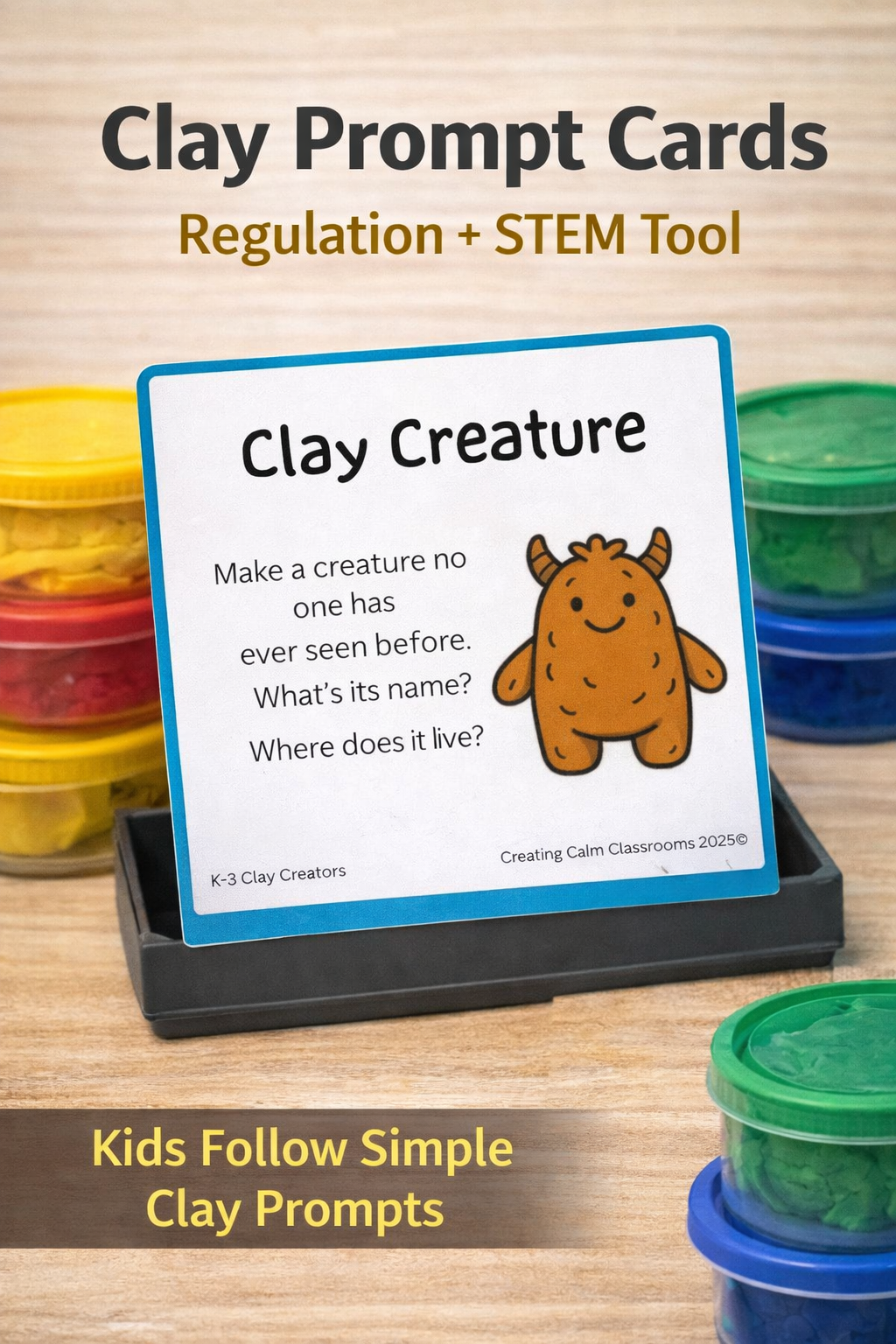
Bring Clay Based Regulation to Your Class
If this resonates, you may be interested in our Clay Cards. They’re designed to help anchor clay-based regulation into the rhythm of the day, translating the neuroscience into simple, repeatable classroom practice. Many primary classrooms already have a Play-Doh or clay center—these cards add structure and intention, with gentle STEM- and SEL-informed prompts built in. They’re used by educators, homeschoolers, and parents looking to make sensory play more supportive and purposeful.
