How Hands-On Art Activities Help Students Regulate Their Emotions
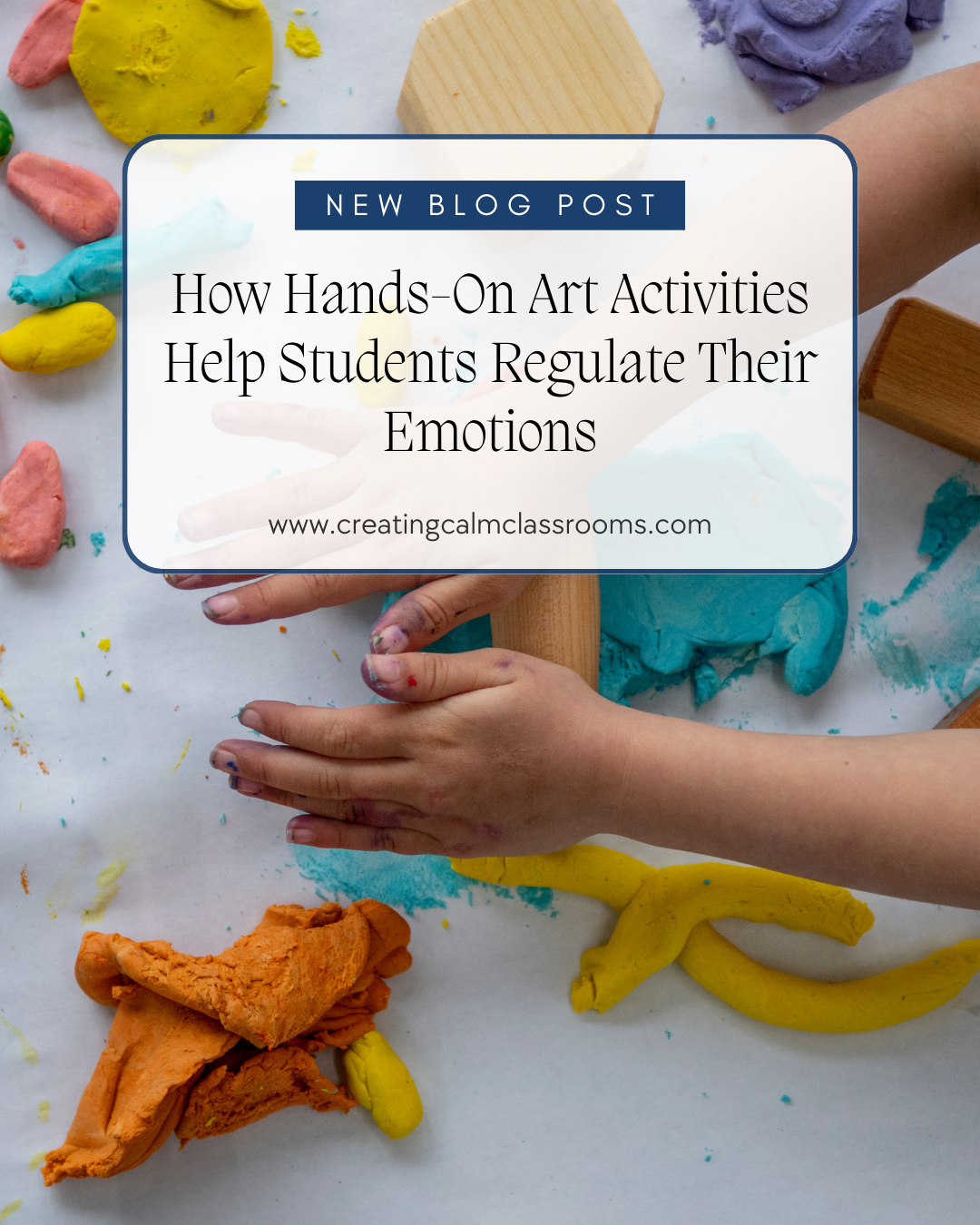
When a student is flooded with emotion: anxious about a test, angry after a conflict at recess, or overwhelmed by the noise of the day, telling them to calm down rarely works. But handing them a ball of clay often does. Why? Because regulation doesn't just happen in the brain. It happens in the body.
Hands-on art activities, especially tactile ones like working with clay, painting, or sculpting, activate the nervous system in ways that talking simply cannot. In this post, we break down the science behind why that is, and share practical ways you can use art-based activities in your elementary or middle school classroom to support student wellbeing every single day.
The Connection Between the Hands and the Nervous System
There's a reason occupational therapists have used sensory-based activities for decades: our hands are hardwired to calm us down. The act of squeezing, pressing, rolling, or shaping a material gives the brain something to do— something rhythmic, predictable, and safe, while the body moves out of a stress response and back into a regulated state.
This is often called proprioceptive input, deep pressure and resistance through the muscles and joints that signals to the nervous system: you are safe, you are here, you are in control. Clay in particular provides exceptionally rich proprioceptive feedback because it requires sustained pressure and repeated movement.
"When kids are dysregulated, they often can't access the language centres of their brain. Art gives them a non-verbal way to process and that can be the bridge back to connection and learning."
Research in neuroeducation supports this too. When students engage in repetitive, hands-on tasks, their brains shift from a reactive state (driven by the amygdala) to a calmer, more reflective one, which is exactly what's needed before learning, problem-solving, or re-engaging with a classroom community.
Why This Matters for Your Classroom
As a teacher, you're already doing so much. You're not expected to be a therapist, but you do have a front-row seat to how your students are feeling, and a huge influence over the conditions that help them feel safe and ready to learn.
Integrating hands-on art activities doesn't have to mean a full art lesson or an elaborate project. Some of the most effective emotion-regulation moments happen in just 5 to 10 minutes, with minimal materials. Think of it as a tool in your toolkit, right alongside brain breaks, breathing exercises, and movement activities.
Here's what art-based regulation can support in your students: reduced anxiety and sensory overwhelm (especially for students who struggle in noisy environments), stronger self-awareness as they practise naming and externalising emotions, a restored sense of control through creative choice, and a stronger classroom community built through shared creative experiences.
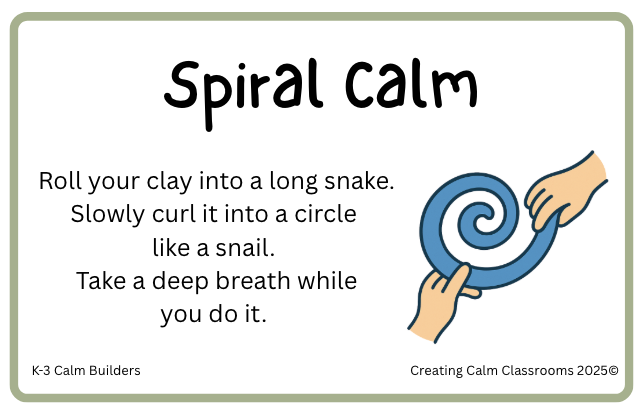
A sample clay activity card from the Classroom Clay Lab used in classrooms to support calm, focus, and emotional processing through tactile work. Download the pack here.
5 Hands-On Art Activities That Support Emotional Regulation
1. Clay Squeeze and Shape Give each student a small piece of clay. Ask them to squeeze it as hard as they can for 10 seconds, then release. Repeat a few times. Then invite them to shape it into something that represents how they're feeling — no skill required. The squeezing is immediately calming, and the shaping invites quiet reflection.
2. Emotion Colour Mixing Using watercolours or liquid paint, ask students to mix the colours they associate with how they're feeling right now. There's no wrong answer — the process of choosing and mixing is meditative and gently focusing. Students can then write one word on their paper to name the feeling.
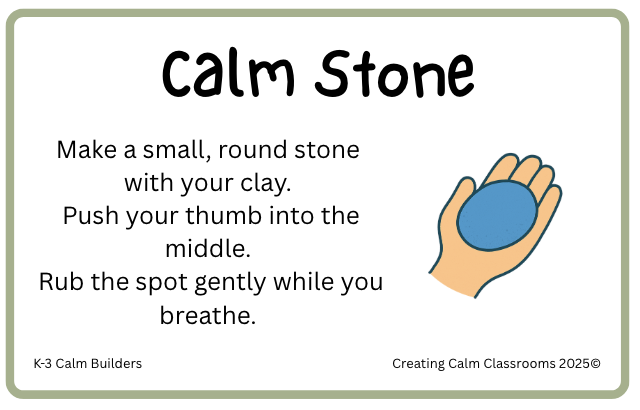
Sample activity card from the Classroom Clay Lab, showing how regulation can be built into everyday classroom moments. Download all 30 cards here.
3. Worry Stones Have students sculpt a smooth, palm-sized stone from clay with a thumb indent in the centre — something to rub when they're feeling anxious. Once dry, these become a personal regulation tool they can keep at their desk. It's both a creative process and a lasting strategy.
4. Torn Paper Emotion Collage Tearing paper is surprisingly therapeutic, especially for frustrated or angry students. Give them magazines or coloured paper and ask them to tear shapes and colours that match their mood, then arrange them on a page. No scissors needed. The tearing provides physical release without harm. Set a timer for the length of the activity and be sure to set some strong ground rules about what and where we can tear.
5. Finger Tracing Mandalas Print simple mandala outlines and have students trace the patterns with their finger before colouring. The slow, circular motion is naturally regulating, similar to mindful breathing. Even reluctant artists tend to find this one peaceful.
How to Make It Work in a Busy Classroom
Timing matters. These activities work best at natural transition points: first thing in the morning, after lunch or recess, after a difficult lesson, or during a calm-down period. Even 5 minutes of intentional creative activity can shift the emotional temperature of your whole class.
💡 Secondary teachers: Don't underestimate how much middle schoolers crave tactile, low-stakes creative activities, especially students who feel uncomfortable with traditional emotional check-ins. Clay gives them a way in without the pressure of putting feelings into words.
Ready-to-Use Clay Activity Cards for Your Classroom
If you want to bring clay-based emotional regulation into your classroom without the planning headache, our Clay Workshop Resource Cards are designed specifically for elementary and middle school classrooms. Each card gives students a clear, calming prompt tied to specific emotions and SEL themes — ready to print, easy to set up, no art expertise required.
Perfect for calm-down corners, morning circles, transition times, or dedicated wellbeing sessions.
👉 Grab your Clay Workshop Resource Cards here →
Final Thoughts
When we give students something to do with their hands, we give them a way back to themselves. Hands-on art activities aren't a distraction from learning — they're often the very thing that makes learning possible.
You don't need a fully equipped art studio or hours of extra planning time. A ball of clay, a simple prompt, and a few minutes of space can change the entire trajectory of a student's day. Start small, try one activity this week, and see what shifts.
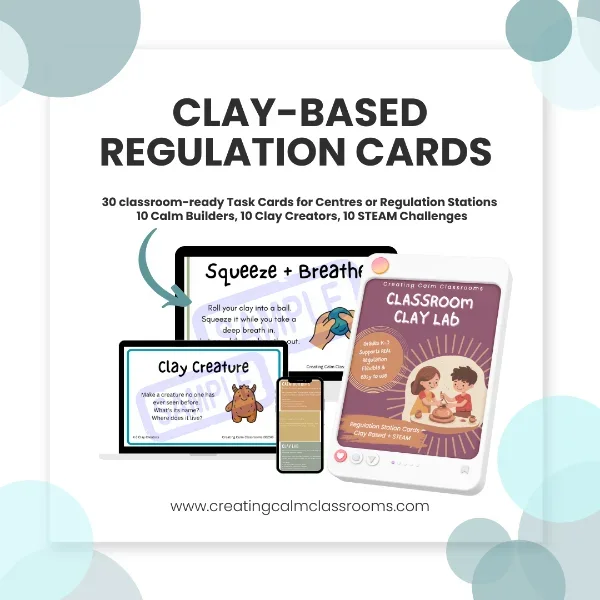
If you love these ideas but want something you can hand to students immediately — without cutting, laminating, or gathering supplies — my Classroom Clay Lab resource has you covered.
Each card walks students through a calming clay activity with simple visual instructions, making them perfect for calm-down corners, early finishers, or sensory breaks. Students can work through them independently while you keep the rest of your class running smoothly.
[👉 Grab the Clay Cards: Print and Go here]
Your students deserve tools that actually work and you deserve a classroom that feels calm. These cards are a simple step toward both.
Save this post for later — pin it so you can find it when you need it most.
